Top 3 Exercises to Prevent Knee Pain While Running
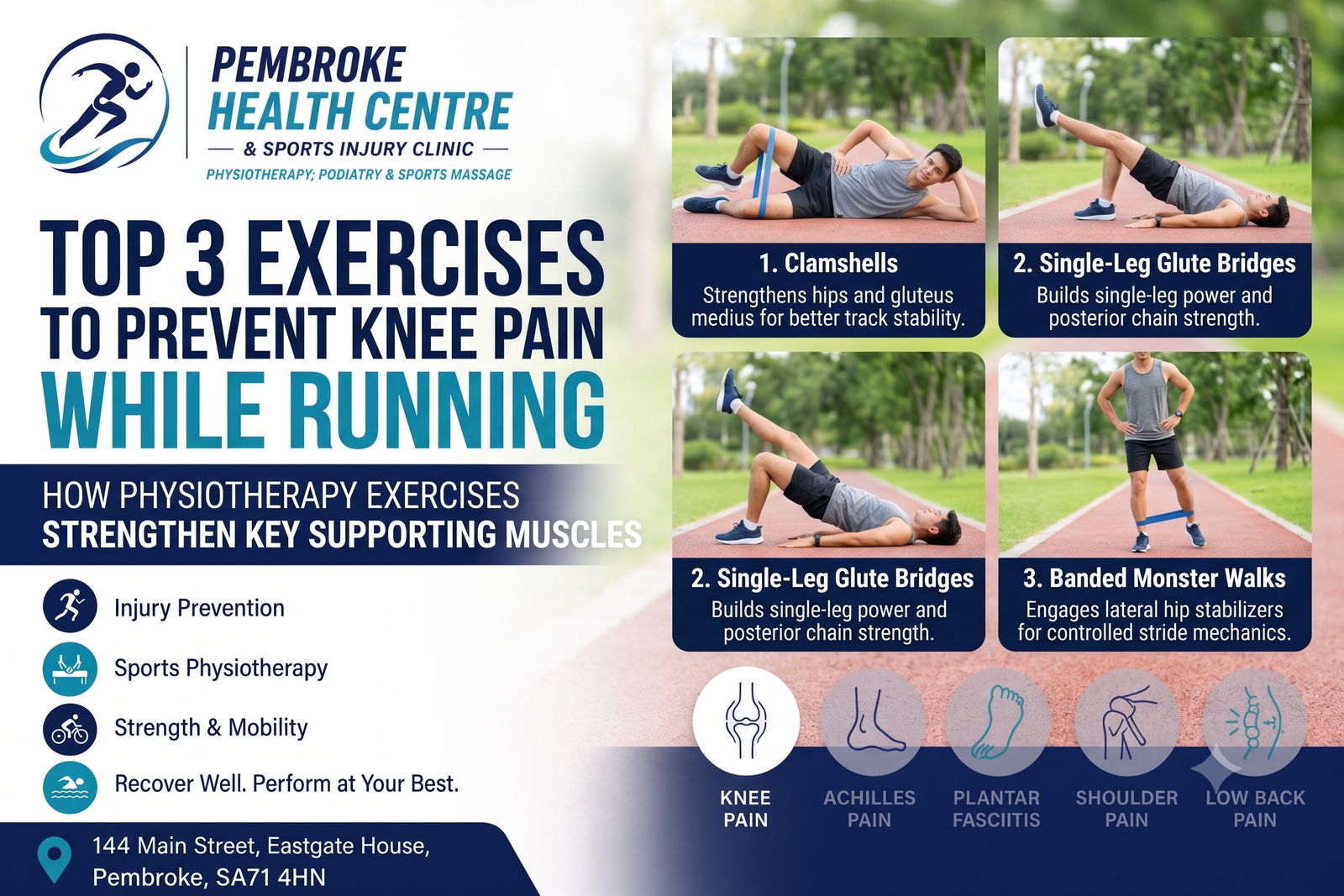
Knee pain can interrupt a running routine and make it difficult to maintain training. Strength and movement control are important parts of running capacity, although no single exercise can prevent every type of knee problem. If you experience recurring knee pain while running, a physiotherapy assessment in Pembroke can help identify factors specific to you.
Why Can Running Cause Knee Pain?
Running creates repeated loading through the knee and lower limb. Problems may occur when training volume or intensity changes faster than the body can adapt. Strength, hip and glute control, ankle mobility, running mechanics, previous injuries and recovery can all be relevant.
Exercise 1: Controlled Squat Strengthening
A controlled squat can train the quadriceps, glutes and other muscles involved in lower-limb control. Begin with a level that is appropriate for your current ability and focus on comfortable, controlled movement. If squatting increases your symptoms, seek individual guidance rather than forcing the exercise.
Exercise 2: Glute Strengthening
The hip and glute muscles contribute to lower-limb control during running. Appropriate strengthening can be included as part of a runner's programme. The exercise selection and progression should match your current strength and any symptoms you have.
Exercise 3: Calf Strengthening
The calf muscles contribute to propulsion and absorb repeated loads during running. Progressive calf strengthening can help build capacity for runners, but the amount and type of loading should be appropriate to the individual.
Why Strength Alone Is Not Enough
Knee pain is not always caused by weak muscles. Training load, mobility, previous injury, running technique and other factors may also be relevant. This is why knee physiotherapy in Pembroke should focus on assessment rather than giving every runner the same exercise programme.
When Should You Get Your Knee Assessed?
Consider professional advice if pain continues, gets worse with running, causes swelling, limits movement, keeps returning or prevents you from participating in sport. Early assessment can help identify contributing factors and guide rehabilitation.
Knee Pain Physiotherapy in Pembroke
Pembroke Health Centre provides physiotherapy, sports therapy and injury rehabilitation. If running-related knee pain is affecting your training, an assessment can help determine appropriate next steps and whether training modification or progressive strengthening is suitable.
Local Service Section
If you are searching for knee pain prevention exercises in Pembroke, Pembroke Health Centre can provide an individual assessment and appropriate physiotherapy or rehabilitation support where suitable. Treatment is based on the person's symptoms, activity level, goals and assessment findings. The clinic also provides related services including sports therapy and massage, injury rehabilitation and other treatment options where appropriate.